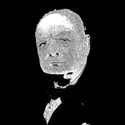
Winston Churchill
Full Name and Common Aliases
Sir Winston Leonard Spencer Churchill is the full name of the iconic British leader, commonly known simply as Winston Churchill. He is often referred to by his last name, Churchill, and is affectionately remembered as the "British Bulldog" for his tenacity and leadership during World War II.
Birth and Death Dates
Winston Churchill was born on November 30, 1874, and he passed away on January 24, 1965. His life spanned a period of immense change and upheaval, during which he played a pivotal role in shaping the course of history.
Nationality and Profession(s)
Churchill was British by nationality. His professional life was multifaceted, encompassing roles as a politician, military officer, writer, and historian. He is best known for his tenure as the Prime Minister of the United Kingdom, serving two non-consecutive terms from 1940 to 1945 and from 1951 to 1955.
Early Life and Background
Winston Churchill was born into the aristocratic Spencer family at Blenheim Palace in Oxfordshire, England. His father, Lord Randolph Churchill, was a prominent Conservative politician, and his mother, Jennie Jerome, was an American socialite. Despite his privileged upbringing, Churchill struggled academically and was often rebellious. He attended the prestigious Harrow School and later the Royal Military Academy Sandhurst, where he graduated with honors, setting the stage for his initial career in the military.
Major Accomplishments
Churchill's career was marked by a series of significant accomplishments. As a young man, he gained fame as a war correspondent, covering conflicts in Cuba, India, Sudan, and South Africa. His early political career saw him holding various governmental positions, including First Lord of the Admiralty, where he was instrumental in modernizing the British Navy.
However, his most notable accomplishment came during World War II. As Prime Minister, Churchill's leadership was crucial in rallying the British people during the darkest days of the war. His speeches and radio broadcasts inspired a nation under siege, and his strategic foresight helped forge the Allied victory against the Axis powers.
Notable Works or Actions
Churchill was not only a statesman but also a prolific writer. He authored numerous books, including the six-volume series "The Second World War" and "A History of the English-Speaking Peoples." His literary prowess earned him the Nobel Prize in Literature in 1953. Churchill's speeches, such as "We shall fight on the beaches" and "Their finest hour," are celebrated for their rhetorical brilliance and emotional power.
Impact and Legacy
Winston Churchill's impact on the world is profound and enduring. His steadfast opposition to Nazi Germany and his role in the Allied victory solidified his reputation as one of the greatest leaders of the 20th century. Beyond his wartime leadership, Churchill's vision for a united Europe laid the groundwork for post-war reconstruction and the eventual formation of the European Union.
His legacy is also marked by his contributions to literature and his advocacy for democracy and freedom. Despite controversies surrounding some of his policies and views, Churchill remains a symbol of resilience and determination.
Why They Are Widely Quoted or Remembered
Churchill is widely quoted and remembered for his eloquence and wit. His speeches and writings are filled with memorable phrases that capture the spirit of his times and the essence of his character. Quotes like "Never, never, never give up" and "Success is not final, failure is not fatal: It is the courage to continue that counts" resonate with people across generations, offering inspiration and guidance.
Churchill's ability to articulate complex ideas in a compelling and accessible manner has ensured that his words continue to be relevant. His quotes are often invoked in discussions about leadership, perseverance, and the human spirit, making him a timeless figure whose influence extends far beyond his lifetime.
Quotes by Winston Churchill
Winston Churchill's insights on:
A pessimist sees the difficulty in every opportunity. An optimist sees the opportunity in every difficulty.
After a time, civil servants tend to become no longer servants and no longer civil.
The substitution of the internal combustion engine for the horse marked a very gloomy milestone in the progress of mankind.
There is no doubt that it is around the family and the home that all the greatest virtues of human society are created, strengthened and maintained.
Renown awaits the commander who first restores artillery to its prime importance on the battlefield.
Hasty work and premature decisions may lead to penalties out of all proportion to the issues immediately involved.
Courage is what it takes to stand up and speak; courage is laso what it takes to sit down and listen.